A commander’s account · Baghdad, 2004–2005
ADJUST
FIRE
Transforming to Win in Iraq
A candid, ground-level account of how one Army battalion transformed under fire—and what its experience teaches about adaptation, leadership, and modern war.
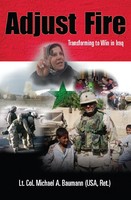
By LTC Michael A. Baumann, U.S. Army (Ret.)
THE MISSION
A rocket artillery battalion.
An infantry mission.
No time to prepare.
Task Force 1-21 deployed to Baghdad trained and equipped to fight a conventional artillery battle. Instead, its soldiers were ordered to secure neighborhoods, patrol hostile streets, negotiate with local leaders, and confront a rapidly growing insurgency.
Adjust Fire chronicles the work of transforming that unit into a motorized infantry battalion—and the courage, sacrifice, judgment, and compassion of the soldiers who carried the mission.
IN THEIR WORDS
“Magnificently
honest.”
“This is the best book yet on the grit-and-gut-level challenges our troops have faced in Iraq. Magnificently honest, Adjust Fire is a work of great integrity.
01
“A compelling and valuable on-the-ground account of counterinsurgency in Iraq. Baumann’s story is one of tremendous adaptation to a very complex environment.
02
“A remarkable account of adaptation to the brutality and complexity of warfare in the 21st century.
03
THE BOOK TRAILER
Follow the battalion
through one year in Iraq.
A visual introduction to the soldiers, the mission, and the transformation at the center of Adjust Fire.
FROM THE DEPLOYMENT
The soldiers.
The mission.
The year in Baghdad.
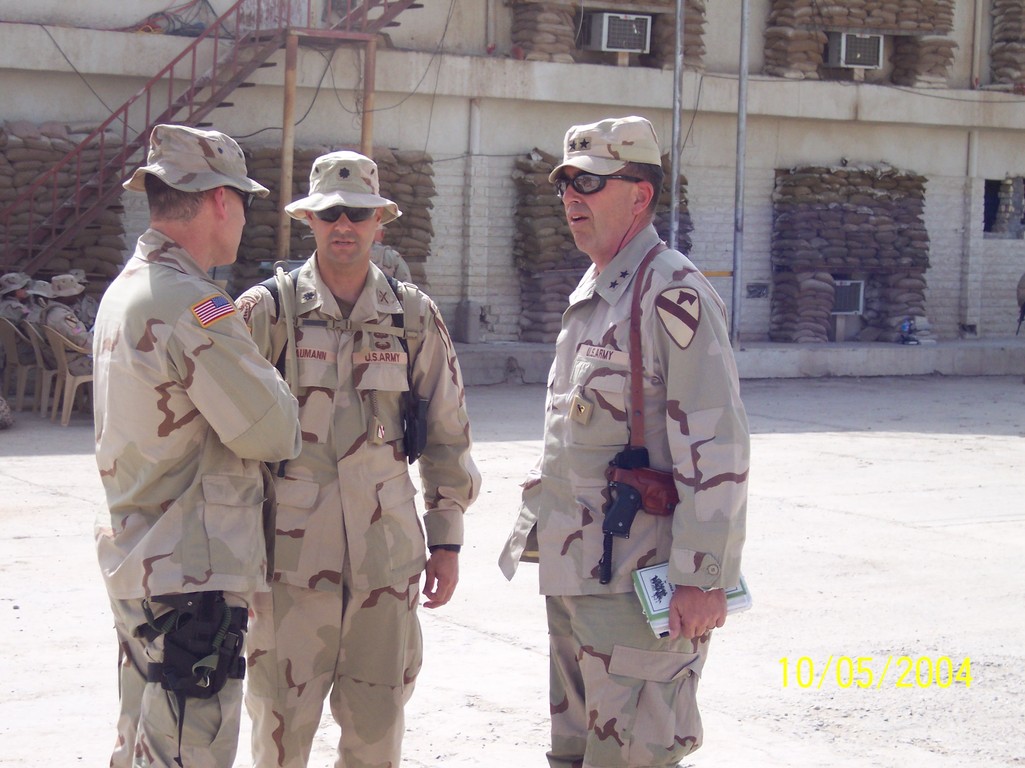
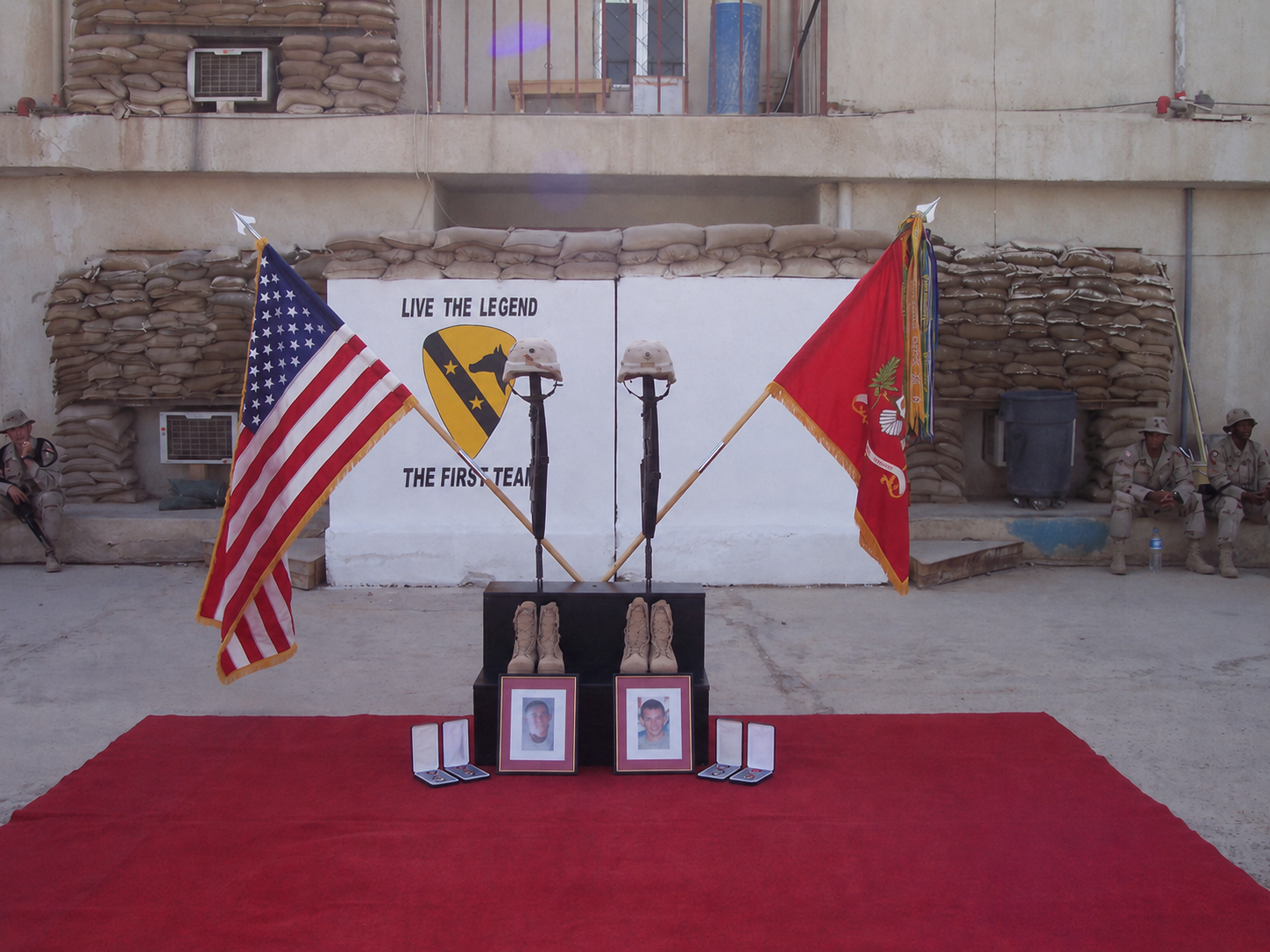
Original photographs from Task Force 1-21’s 2004–2005 deployment. Select any image to view it at full size.
FROM CHAPTER ONE
Unsuited: 1-21 Field Artillery Begins Transforming
By March 2004, when the First Cavalry Division arrived in Baghdad, the insurgency in Iraq had taken root right under the noses of the Coalition military units that executed the initial attack.
To fight in Iraq, I, along with many of my peers, had to profoundly transform our units to meet the unanticipated demands of fighting a counterinsurgency war. I was commanding a rocket artillery battalion. We were trained, outfitted, and fully resourced to move rocket artillery around on a wide-open battlefield. We would do none of that in Iraq.
Continue reading the excerpt +
I was commanding a battalion in an unsuited Army heading into the cauldron of a burgeoning insurgency war. Having to fundamentally change the operational structure and basic function of an entire Army battalion as part of the preparation process was intimidating. Understanding this reality is central to understanding the way America was fighting the war in Iraq.
AVAILABLE NOW